Course Content
AI Agents
Understand how intelligent agents operate within the Agentforce ecosystem, from autonomous decision-making to task execution and communication within distributed systems.
0/6
Prompt Engineering
Learn the art and science of crafting effective prompts for AI agents to maximize accuracy, reliability, and contextual relevance. Perfect for developers, analysts, and AI integrators.
0/6
Data 360 for Agentforce
Explore the data architecture and services that power Agentforce. Learn how to securely manage, query, and optimize data workflows for agent interactions and training.
0/4
Development Lifecycle
Master the lifecycle of Agentforce solution development—from ideation and design to deployment and optimization. We'll cover versioning, collaboration, and testing best practices.
0/3
Multi-Agent Interoperability
Delve into how different AI agents collaborate across systems and services, ensuring seamless task handoffs, data sharing, and coordination in complex workflows.
0/3
Final Exam Preparation
This walkthrough focuses on how Salesforce expects Agentforce to behave. You’ll learn the “exam traps” that cause wrong answers—even when you know the features.
0/3
Agentforce Specialist Certification (Study Guide)

Agentforce Reasoning & Orchestration

Let’s explore how Agentforce thinks and acts. In this lesson, you’ll learn how reasoning and LLM orchestration drive intelligent, real-time conversations.

Unlike traditional chatbots, Agentforce doesn’t follow a script. It uses real-time reasoning and AI orchestration to decide what to say — and what to do — based on user intent.
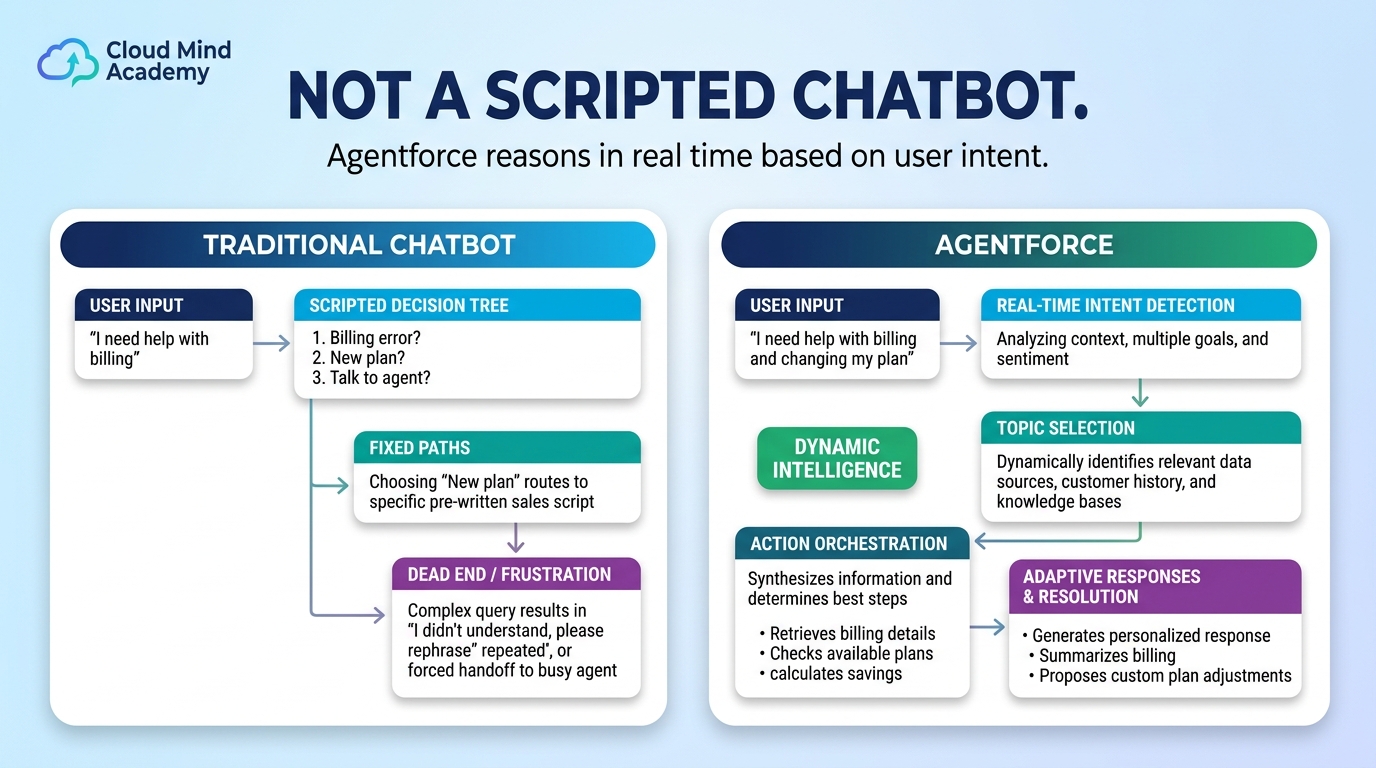
This is made possible through a powerful partnership between two core components: the Reasoning Engine and a Large Language Model (LLM).

Step 1: Reasoning Engine + LLM = Intelligent Behavior

Let’s break down how these two systems work together:
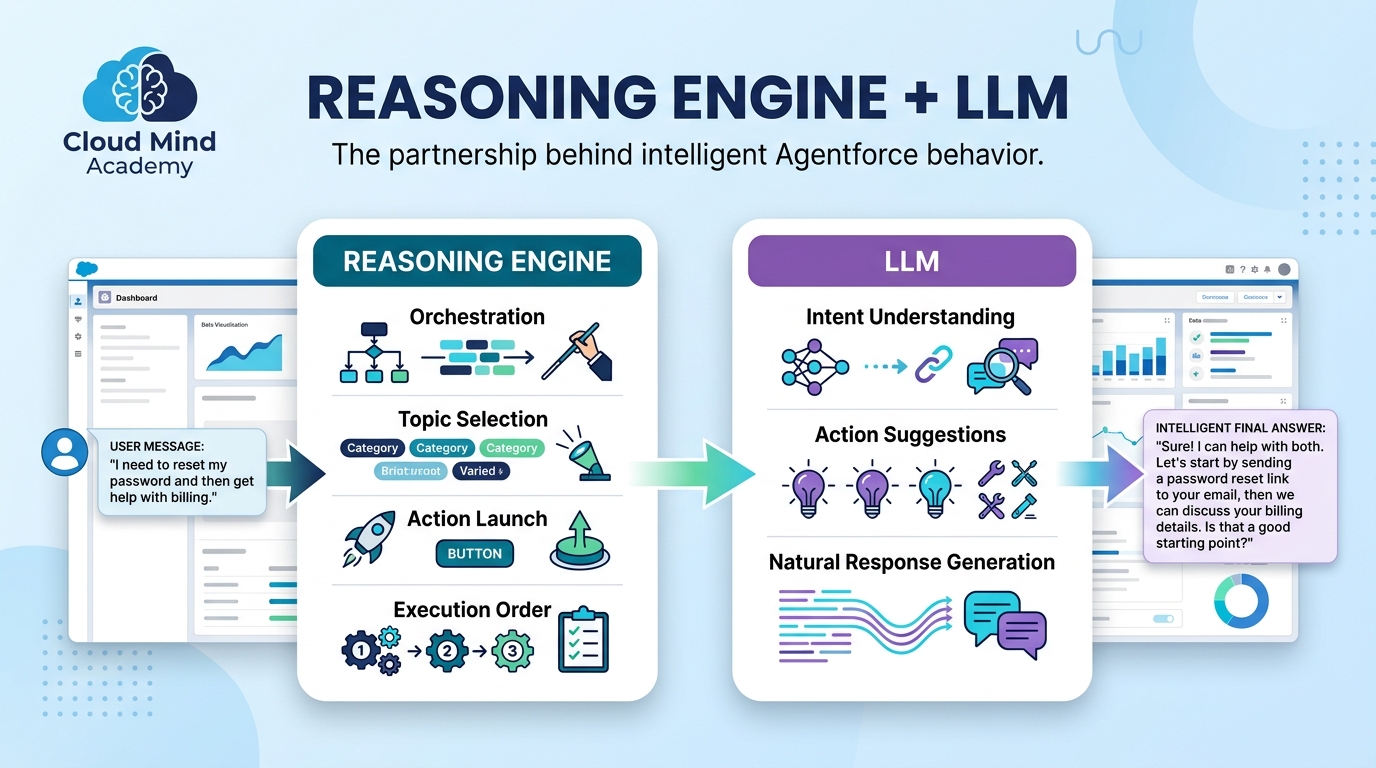
🧠 Reasoning Engine (Planner Service)

  • Acts as the orchestrator behind the scenes
  • Determines which topics and actions to launch
  • Controls execution order during conversations

💬 Large Language Model (LLM)

  • Understands the user’s message and intent
  • Suggests relevant actions to take
  • Crafts natural, human-like responses

For every user message, the Reasoning Engine may call the LLM multiple times depending on complexity. The more advanced the request, the more planning and LLM involvement required.

Step 2: Agentforce’s 5-Step Reasoning Lifecycle

When a user message comes in, here’s what happens behind the scenes:
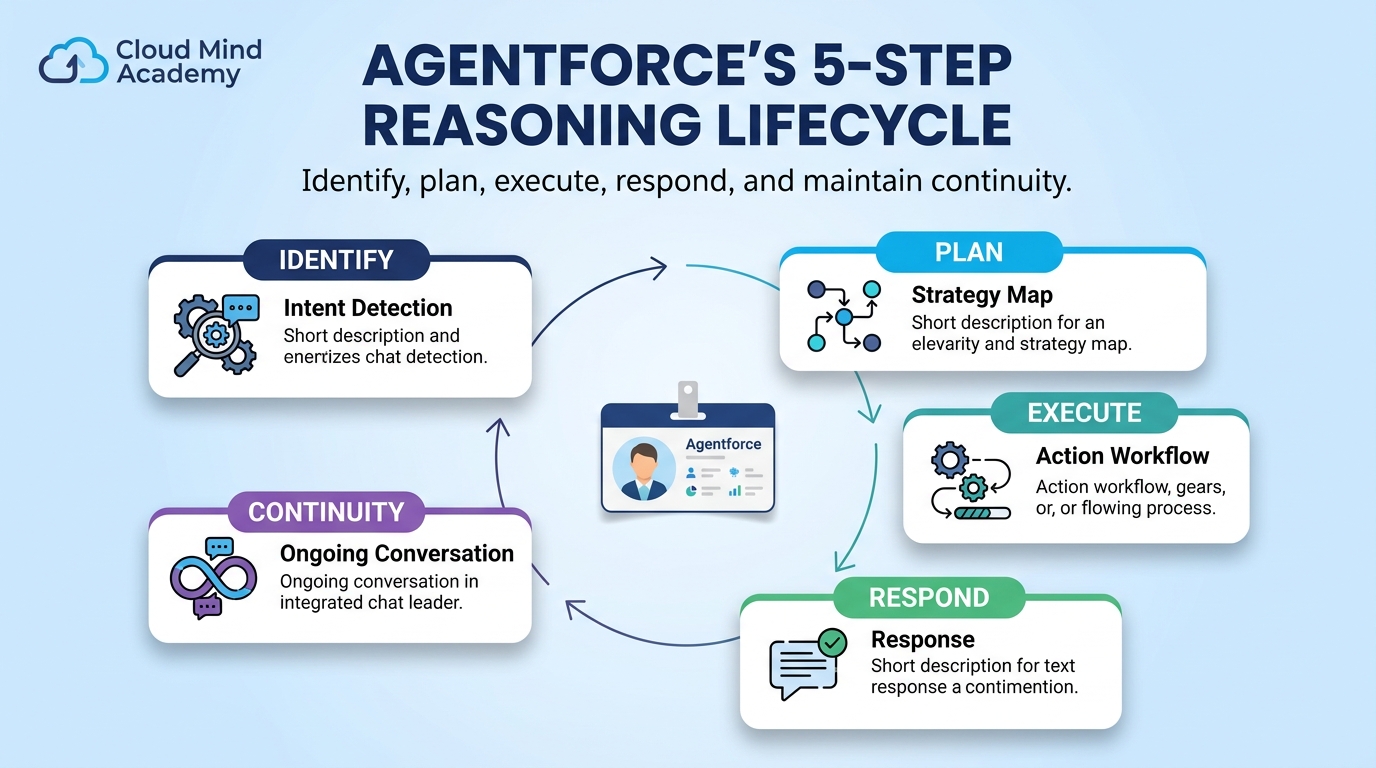
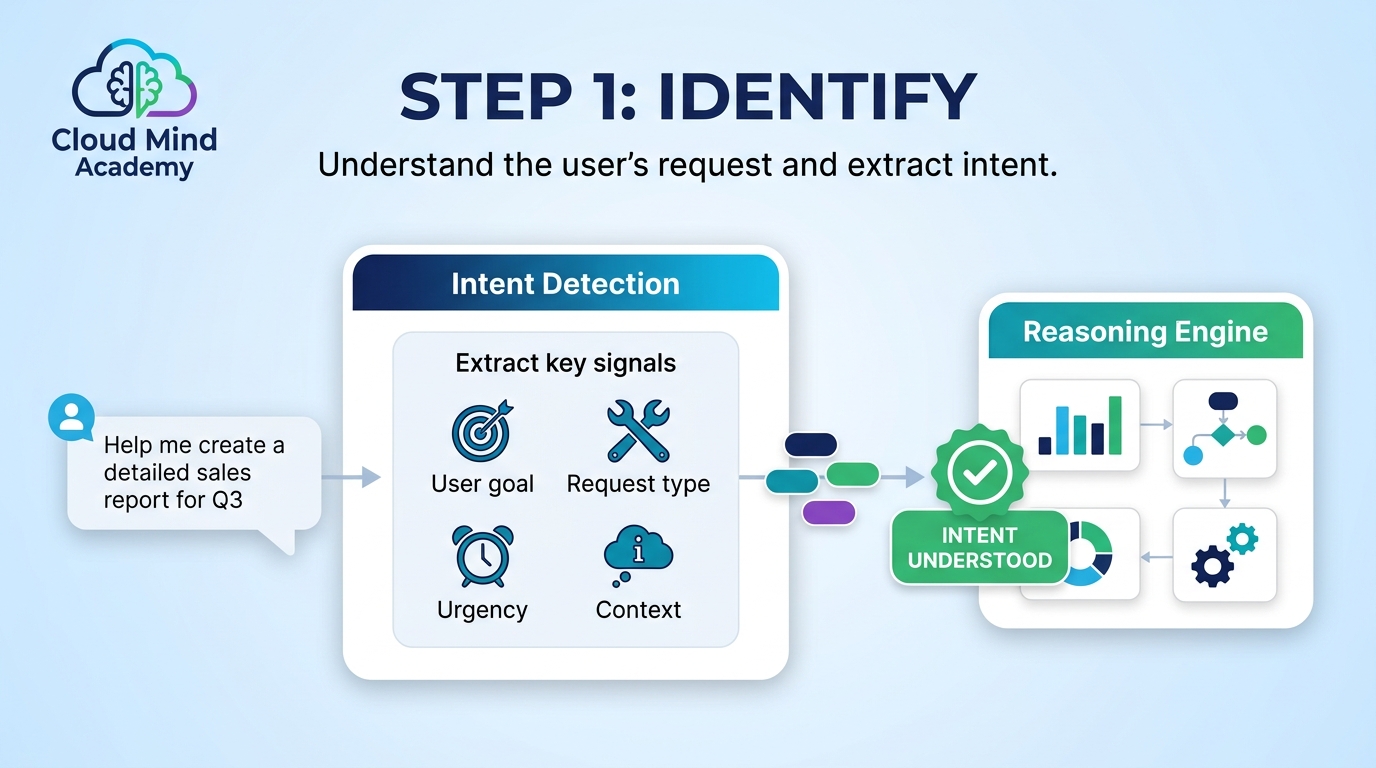
  1. Identify: Understand the user’s request and extract intent.
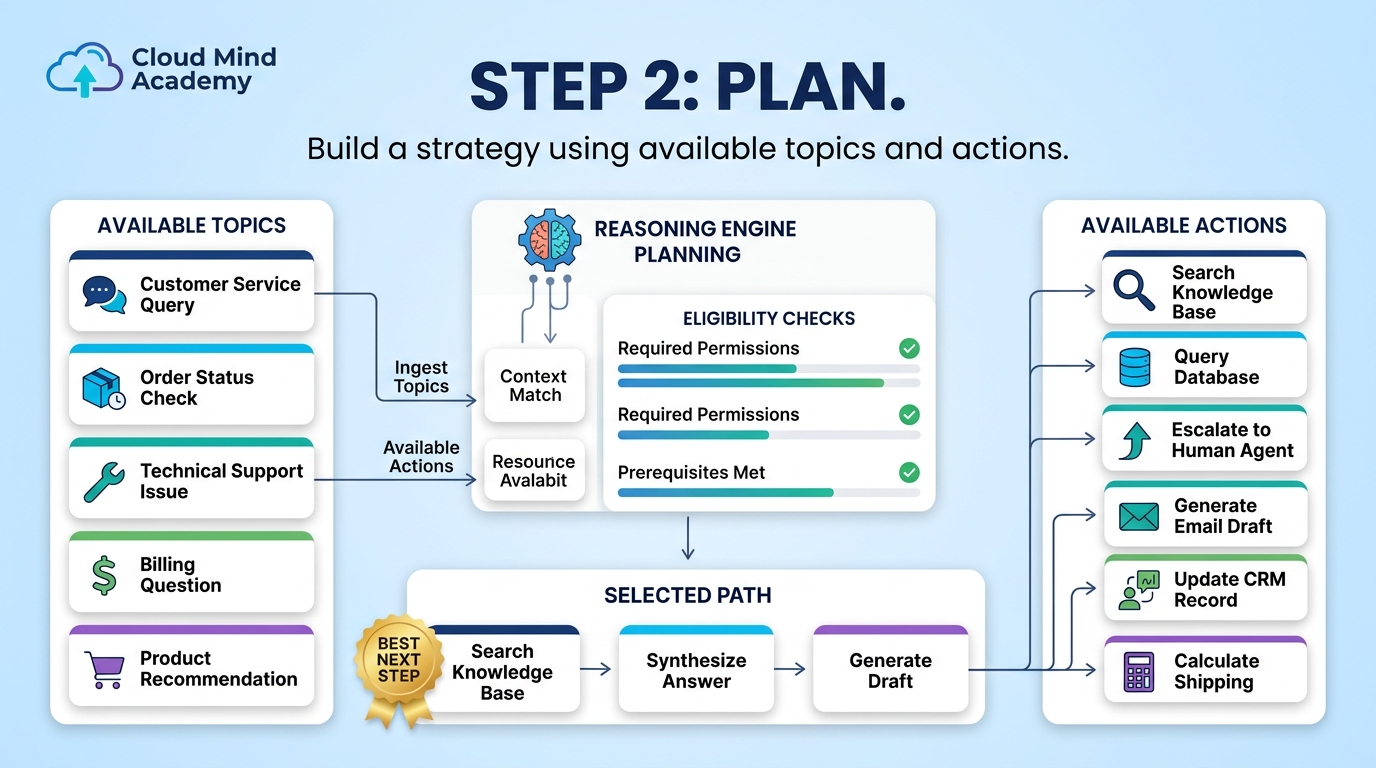
  2. Plan: Build a strategy using available topics and actions.
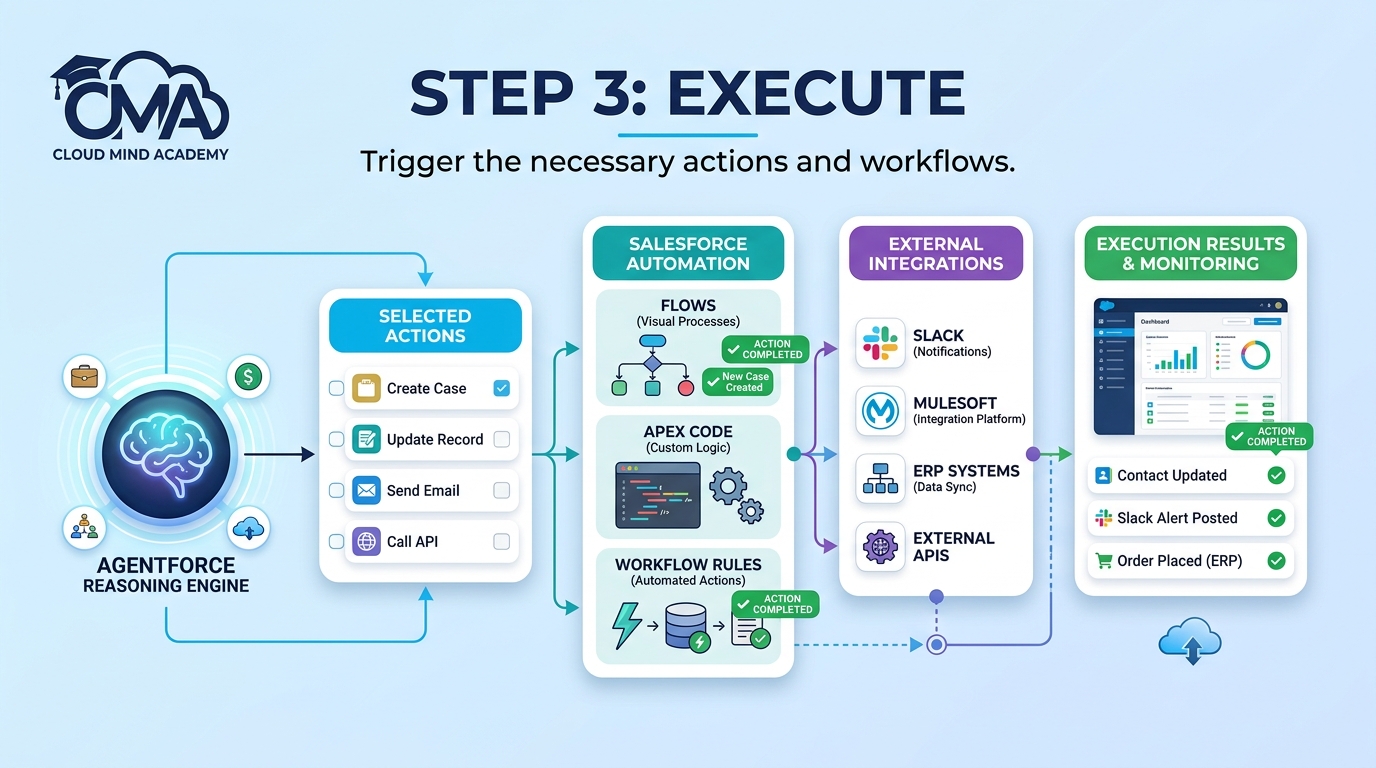
  3. Execute: Trigger the necessary actions and workflows.
  4. Respond: Generate a clear, contextually accurate reply.
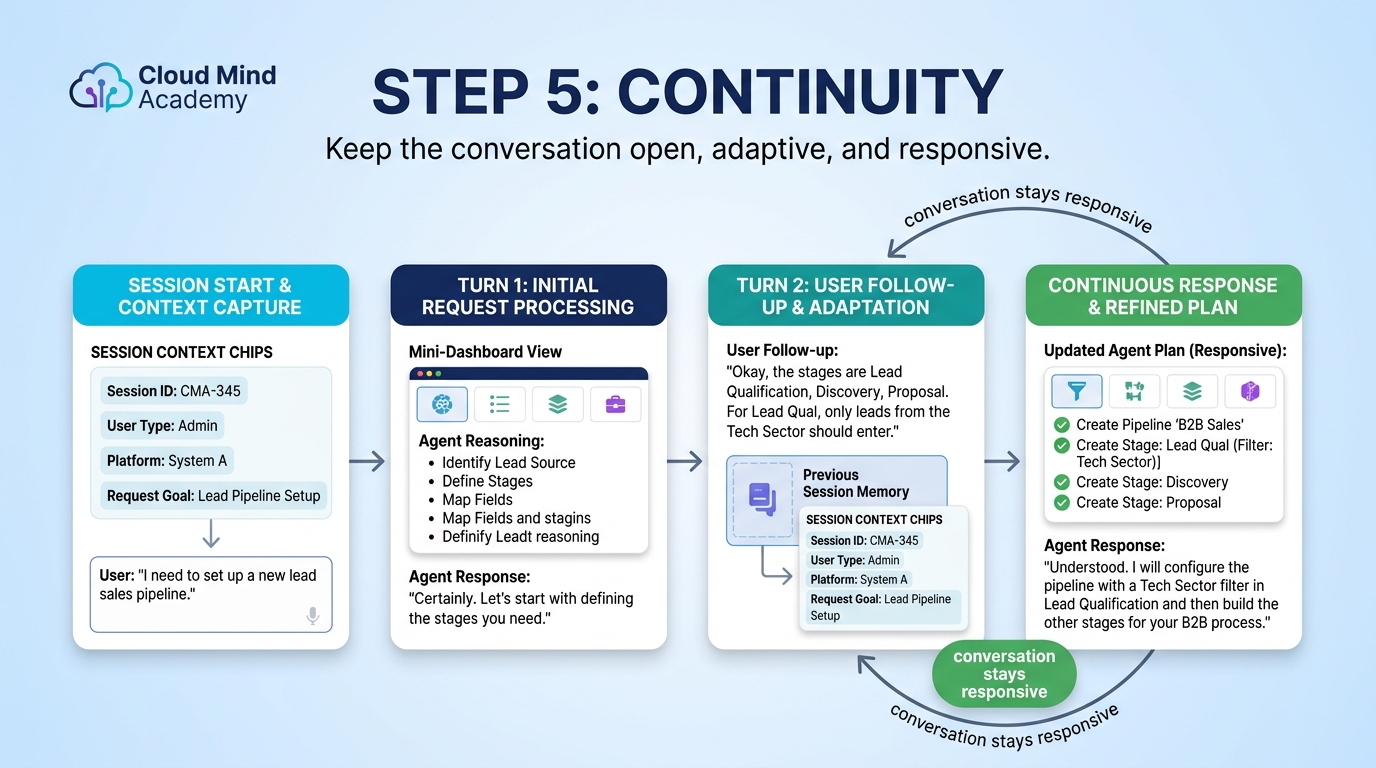
  5. Continuity: Keep the conversation open and responsive.

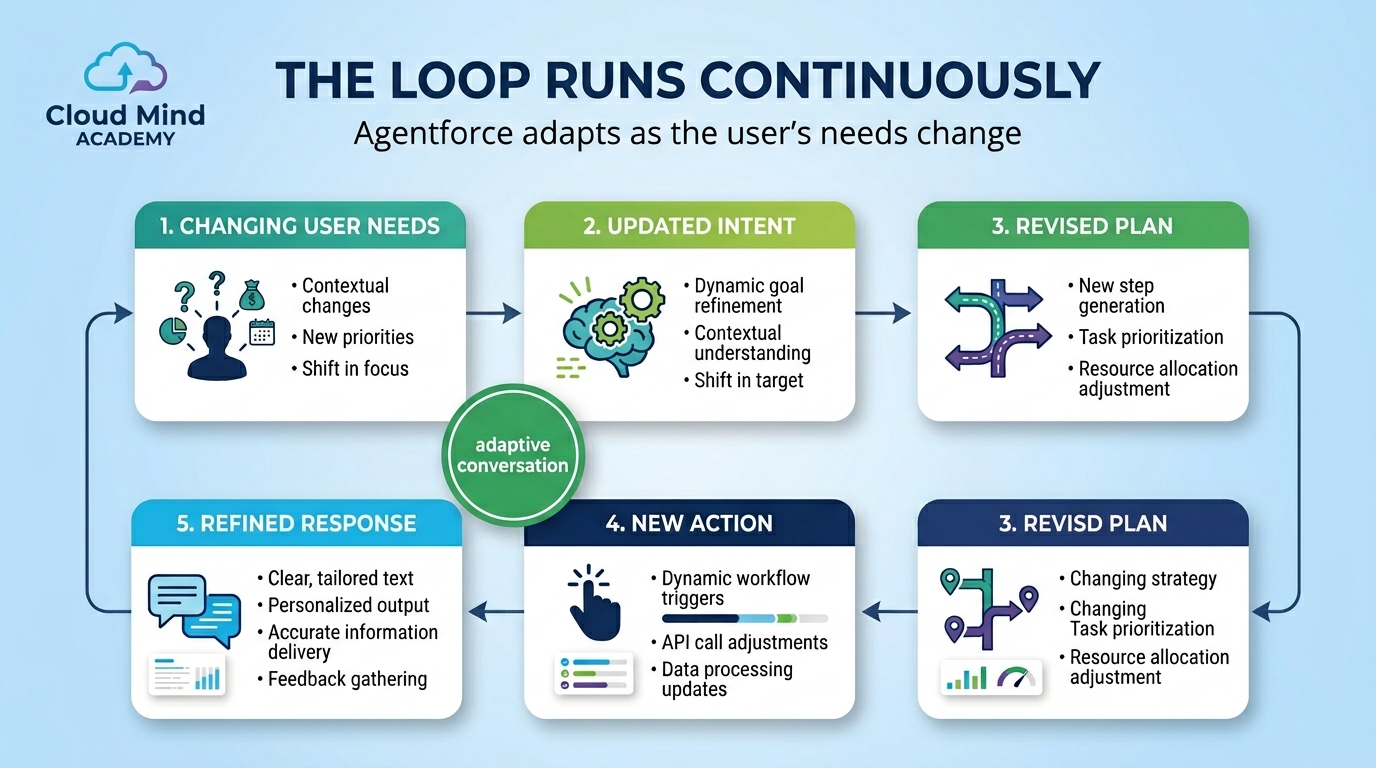
This loop runs continuously, allowing agents to adapt and respond to changing user needs without missing a beat.
Step 3: Flexibility with Supported LLMs

Agentforce is designed to support a variety of LLMs depending on the use case:

  • Planner Service: Uses OpenAI GPT-4o for orchestration and reasoning
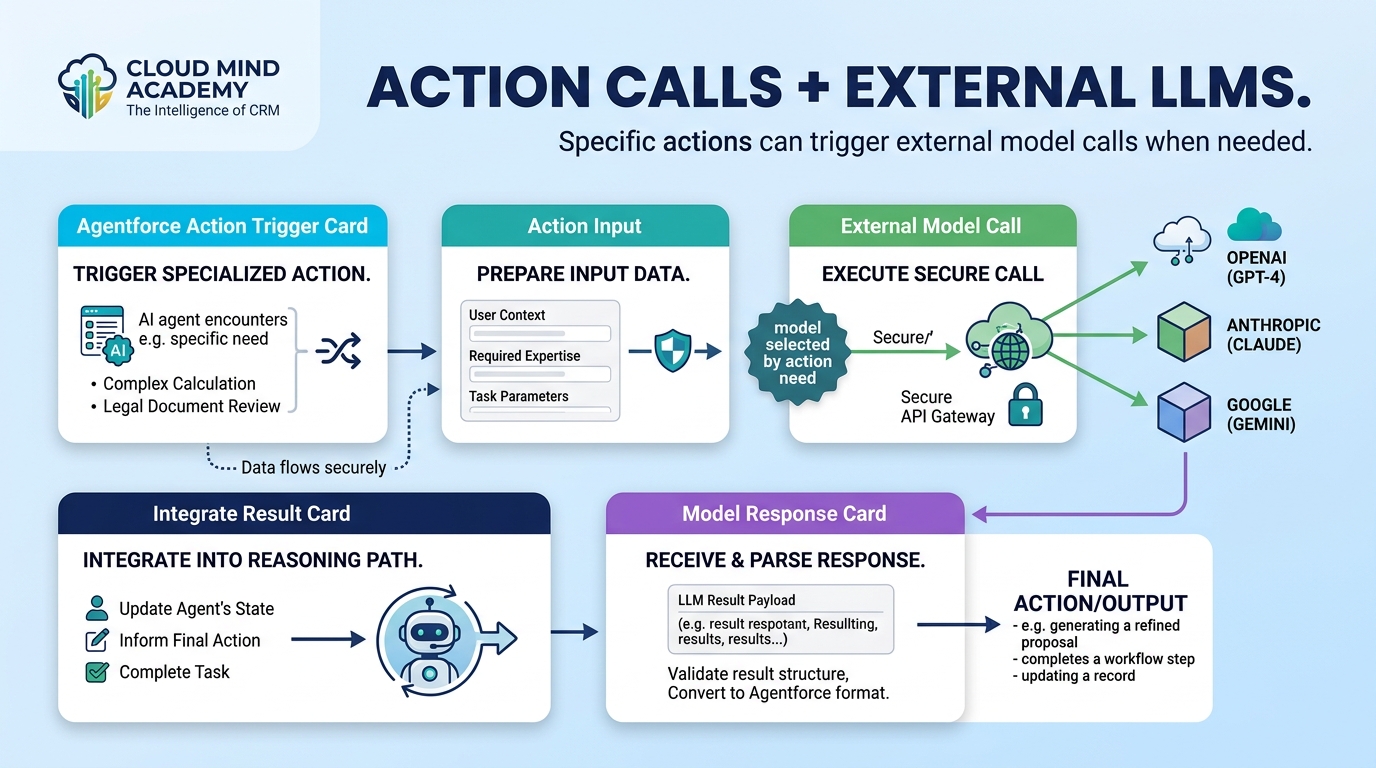
  • Action Calls: Specific actions can trigger external LLMs
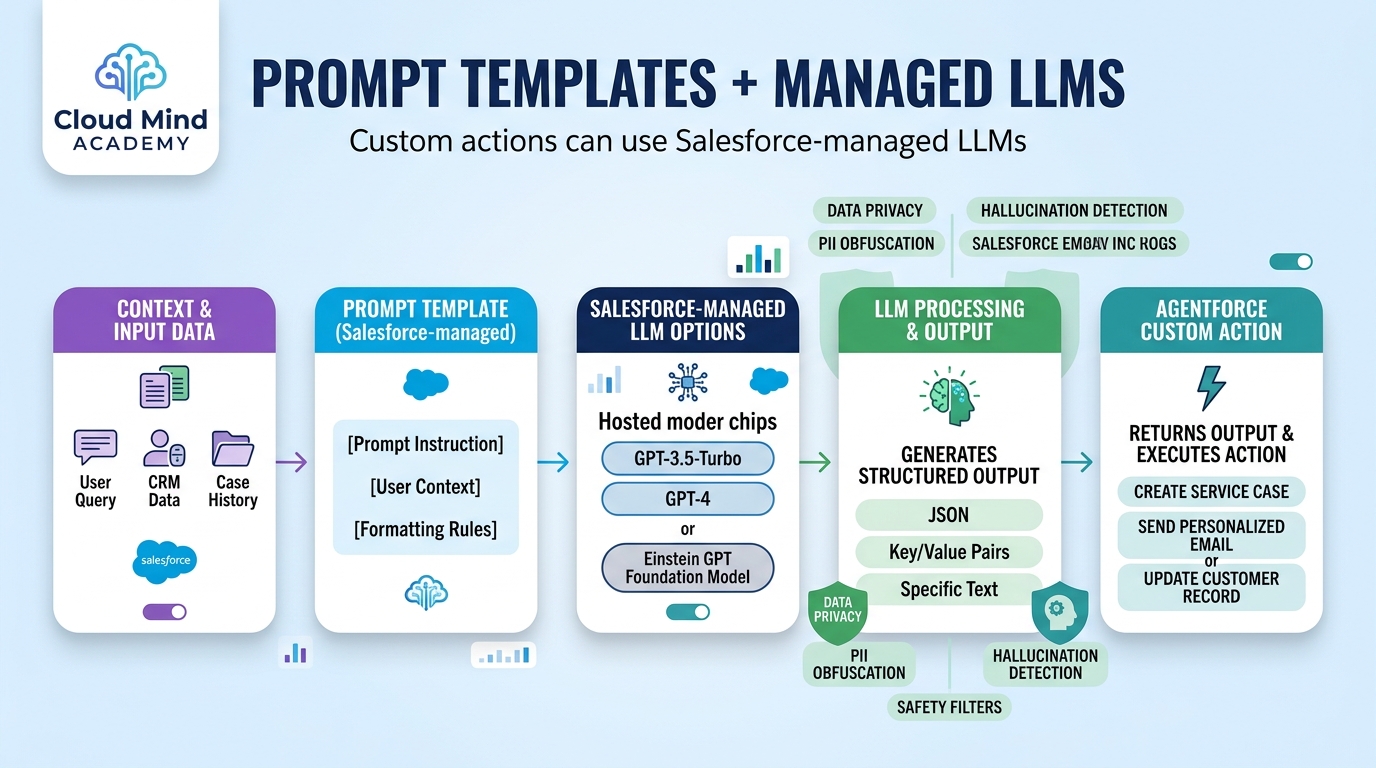
  • Prompt Templates: Custom actions can use any Salesforce-managed LLM

This gives you full control to balance performance, privacy, and cost — depending on what the agent needs to do.
 

Step 4: Debugging & Transparency

To help you understand how an agent made a decision, Agentforce provides full traceability.
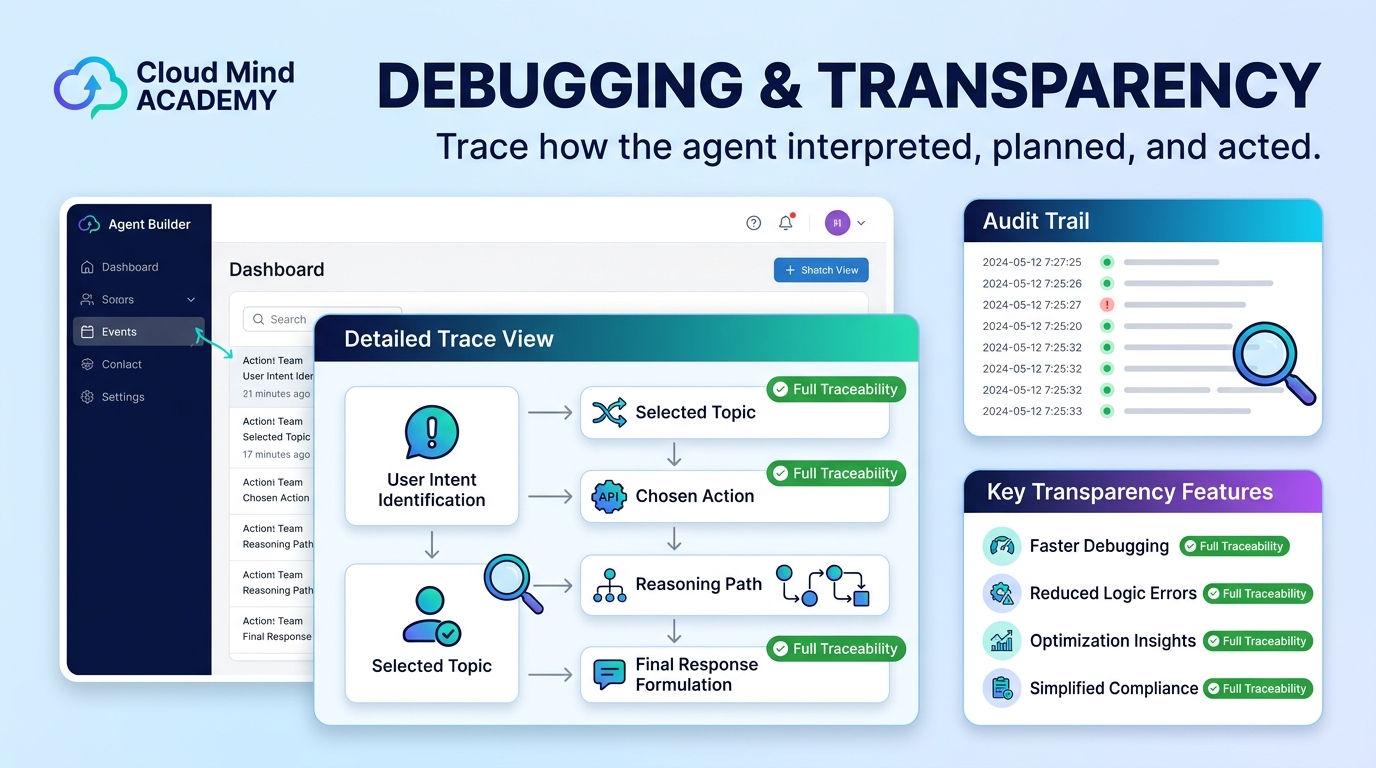
  • Event Logs: Available in the Agent Builder’s Events panel
  • Review how user intent was interpreted
  • See the reasoning path — which topics and actions were chosen and why

These logs are your best tool for improving accuracy, troubleshooting odd behavior, and proving auditability.

Next: See Reasoning in Action

You now understand how Agentforce reasons and orchestrates. In the next lesson, we’ll walk through a live scenario.

Click “Next” to Continue →
0% Complete